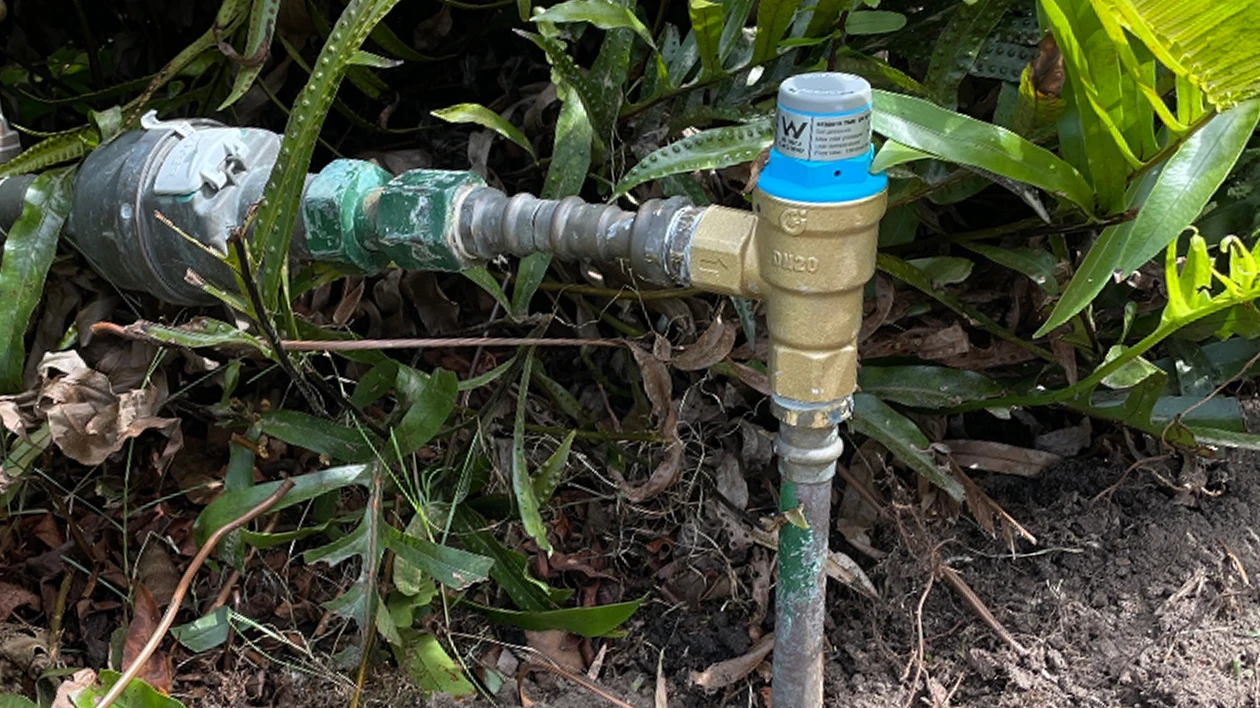
Water hammer is the loud banging noise in your pipes caused by a sudden change in water pressure, known as hydraulic shock. It is common in Sydney homes for a reason, and there is a fix you can try yourself in about 15 minutes. Turn off your main water valve. Open all the taps and let the system drain. Turn the water back on to restore the air cushions inside your pipes.
That reset costs nothing. Below is the full process, why Sydney’s mains pressure makes this so common, and how to tell whether your banging pipes are a nuisance or a warning sign.
Can water hammer burst a pipe?
Yes. Severe water hammer can burst pipes, blow out fittings and void appliance warranties.
The pressure spike is the part people underestimate. Laboratory testing of standard half-inch residential pipe recorded peak pressures of around 1,340 kPa in copper at a low flow rate. At a higher flow rate it hit close to 2,910 kPa (NAHB Research Center, Surge Pressure in Plumbing Pipe Materials, 2009).
AS/NZS 3500.1 caps the maximum static pressure at any outlet inside an Australian building at 500 kPa, and the standard specifically names water hammer as one of the reasons for that limit. A system sitting legally at 500 kPa can momentarily see several times that figure every time your washing machine changes cycles. Your pipe is rated for the reading on the gauge. The shockwave is a different number entirely.
That spike hits joints, tap fittings and solenoid valves over and over, which is why the damage is cumulative rather than sudden. Run through this quick check before you do anything else.
Self-assessment checklist
- Does the banging happen when the washing machine or dishwasher changes cycles?
- Are your pipes physically shaking or vibrating against the wall or under the floor?
- Can you see weeping or leaking around tap fittings, isolation valves or appliance hoses?
What to do with your answer
If you ticked two or more boxes, turn off the isolation valve behind the appliance now. If your pipes are visibly moving, treat it as urgent. Movement means the pipe is loose in its brackets and the shock has enough force to shift it, which is how joints let go. Get a licensed plumber out to check your pressure limiting valve (PLV) and your mains pressure before you spend money on anything else.
If the weeping is around a tap rather than an appliance, the fitting has probably already taken damage and will need a tap repair once the pressure problem is sorted.
If you ticked none of them and the noise is occasional, work through the reset below.
Why water hammer is so common in Sydney homes
Most articles treat water hammer as bad luck. In Sydney it is closer to the default condition of the network.
Sydney Water measures supply pressure in metres head, which is simply the height water would rise vertically. Its Operating Licence requires a minimum of 15 metres head at the point of connection to your property, usually the mains tap. The current network average is 52 metres head. Most properties across Sydney, the Illawarra and the Blue Mountains sit between 15 and 65 metres head, and some receive well above 100 metres head.
Convert that to the units the plumbing standard uses, at roughly 9.81 kPa per metre of head, and the picture changes.
| Pressure at the water main | Roughly | What it means for your house |
|---|---|---|
| 15 metres head (Sydney Water minimum) | 147 kPa | The lowest Sydney Water is licensed to supply. Fixtures work, but weakly. |
| 52 metres head (network average) | 510 kPa | Already at the limit AS/NZS 3500.1 sets for outlets inside a building. |
| 65 metres head (upper end of typical) | 638 kPa | Above the limit. A pressure limiting valve is doing real work here. |
| Above 100 metres head (some properties) | 980 kPa and up | Close to double the limit before it even reaches your taps. |
Two caveats worth understanding. Pressure at the main is not the same as pressure at your kitchen tap, because elevation and pipe friction reduce it on the way. And the 500 kPa figure applies to outlets inside the building, not to what the utility delivers at the boundary.
The point still holds. The average Sydney property is fed at or above the pressure the standard permits inside the house. Something has to bring it down, and that something is a pressure limiting valve. If yours has failed, or the house never had one, your pipes are carrying more than they were designed to carry.
Elevation matters too. Water pressure is higher at low-lying properties and lower on the ridges, so two homes a few streets apart can have very different pressure. On the North Shore, that means a house down towards the Lane Cove valley can be running noticeably harder than one up on the ridge at Pymble or Turramurra.
Sydney Water also runs an ongoing Water Pressure Management Program targeting areas of Greater Sydney where pressure is higher than average. If your water hammer started suddenly and nothing changed inside the house, network work in your area is worth ruling out.
Will water hammer go away on its own?
No. Water hammer never resolves itself. The hydraulic shock keeps happening until either the pressure issue is fixed or the air cushions in your pipework are restored. Every bang you ignore is another impact on your fittings. It builds. There is rarely one dramatic failure. There is a joint that finally lets go.
The more useful question is why it started when it did. Water hammer that appears out of nowhere almost always has a trigger.
Common triggers
- A new appliance. Modern washing machines and dishwashers use fast-acting solenoid valves that slam shut in a fraction of a second. Older appliances closed more gradually.
- A pressure change in your street. Sydney Water adjusts network pressure during works and as part of its Water Pressure Management Program. Check for current work in your area on their website.
- A failing PLV. If your home has a pressure limiting valve at the meter, it will wear out eventually. A failed valve lets full mains pressure into the house, and as the figures above show, that is a lot of pressure in most of Sydney.
- Waterlogged air chambers. The most common cause of all, and the easiest to fix yourself.
Key takeaway: Waiting it out turns a free DIY fix into a burst pipe and a water-damaged floor.
How to fix water hammer yourself in 15 minutes
Older Australian homes often have air chambers, short capped sections of pipe that trap air and absorb the shock. Newer homes may not, which is why the reset below works for some houses and not others. Over time those chambers fill with water and stop working. Draining the system pulls the air back in.
If your home has them, this takes about 15 minutes. You do not need tools, and you do not need to touch any fittings.
The 5-step system reset
- Turn off your mains. Go to your water meter at the front boundary or nature strip and close the isolation valve.
- Open the highest tap in the house. Usually an upstairs bathroom basin or a high showerhead. Turn the cold tap on full.
- Open the lowest tap. Usually a garden tap or the laundry tub. Open it fully.
- Let the system drain. Wait until water stops running completely from the lowest tap. This is the step people rush. Give it a few minutes past the point where it slows to a dribble, because that last bit of drainage is what draws air back into the chambers.
- Re-pressurise slowly. Close the lowest tap. Open the mains halfway and let the highest tap sputter and cough out the trapped air until it runs clean. Close the highest tap, then open the mains fully.
How to know it worked
Run the washing machine, or turn a tap off quickly and firmly. If the bang is gone, your air chambers have reset and you are done. If it returns within a week, the chambers are not holding air. You need hardware, not another reset.
The best way to get rid of water hammer permanently
If the reset does not hold, the long-term solution is either a water hammer arrestor on the offending appliance or a pressure limiting valve at the mains. Which one you need depends on where the noise is coming from.
| Solution | Time | Best for |
|---|---|---|
| System reset | 15 minutes | Waterlogged air chambers, first-time water hammer |
| Water hammer arrestor | Around 10 minutes per appliance | Washing machines and dishwashers with fast-acting solenoid valves |
| Pressure limiting valve | 1 to 2 hours | High mains pressure affecting the whole house |
Work out which one you need
- Does the banging only happen with the washing machine or dishwasher? An arrestor screws in between the tap and the appliance hose. It is a small job, but it is plumbing work, so get it fitted properly.
- Does it happen with every tap in the house? Your mains pressure is the problem, not the appliance. A plumber can test your pressure in a few minutes and fit or replace a PLV.
- Is the noise coming from inside a wall or ceiling cavity? Do not start opening things up. Loose pipework in a cavity needs to be found before it can be re-clipped, and finding it is the hard part. This is what non-invasive leak detection is for.
What a PLV actually buys you
Most people think of a PLV as a way to stop the noise. It is better understood as maintenance.
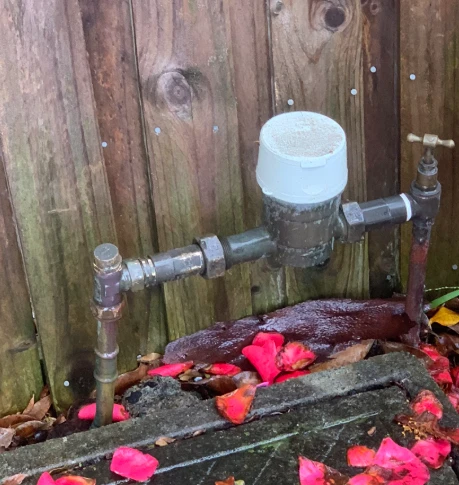
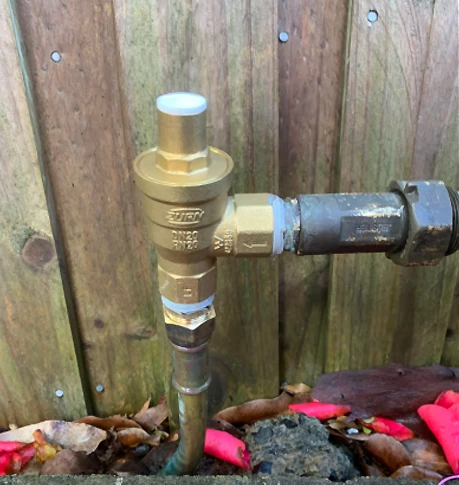
Strata Community Insurance, an Australian strata insurance specialist backed by Allianz, advises owners corporations on exactly this. Their advice is direct: fitting a PLV at the mains reduces load on pipes and joints, and may add five to seven years to their working life (Water Damage Can Be Avoided, Strata Community Insurance, as at 2021).
That advice comes from the party that pays the claim, not the party fitting the valve. The same publication records more than $50 million in water damage claims paid over three years. One case: a split flexi hose worth about $8 sent water through three floors of an apartment block. The building repair bill was $80,000. Five apartments had contents damage and the occupants were out of their homes for around four weeks.
That particular hose failed from age, not water hammer. But pressure is what flexi hoses fail under, and water hammer is pressure arriving all at once.
If you live in a Sydney unit or townhouse, the $80,000 is the number to sit with. Water hammer in a strata building is not contained to your lot. The pressure that is banging your pipes is the same pressure sitting on every flexi hose and joint in the stack. If you sit on a strata committee, this belongs in your maintenance plan alongside the rest of your strata plumbing.
When to call a plumber
Book a plumber if any of the following apply.
- The reset worked once but the banging came back within days
- Pipes are visibly moving, or you can hear the noise through walls or ceilings
- You have leaking or weeping around fittings, or a damp patch on a wall
- The noise started after Sydney Water did work in your street
- Your home has no PLV, or you do not know whether it has one
- You are in a strata building and the noise is audible in more than one lot
Water hammer gives you warning before it becomes an emergency. Not every plumbing fault does. Pressure testing and a PLV are straightforward jobs. Repairing a burst pipe inside a wall is not. If a pipe has already let go, that is an emergency plumbing job, not a maintenance one.
If your pipes are banging and the reset has not held, call Ready Set Plumb on 0422 704 670 or request a fixed price quote. We service Sydney’s North Shore with upfront pricing and a lifetime labour guarantee on our workmanship.
Frequently asked questions
What is normal water pressure in Sydney?
Sydney Water’s network averages 52 metres head, which is roughly 510 kPa, and most properties sit between 15 and 65 metres head. Some receive above 100 metres head. Inside your home, AS/NZS 3500.1 requires static pressure at any outlet to stay at or below 500 kPa, so a pressure limiting valve is what bridges the gap in much of Sydney. You can get an indicative reading by fitting a pressure gauge to the garden tap nearest your meter.
Is water hammer covered by home insurance?
Water hammer itself is not a claimable event, but resulting damage from a burst pipe may be, depending on your policy. Insurers generally distinguish between sudden damage and gradual damage, and a fault you have known about for months tends to fall into the second category. Check your product disclosure statement.
Can water hammer damage my hot water system?
It can. Repeated shock loading stresses the inlet and outlet connections and the tempering valve. Some manufacturers also exclude damage caused by excessive water pressure from their warranty, which is another reason to test pressure rather than live with it. If yours is already noisy or leaking, have the hot water system checked at the same time as your mains pressure.
Why does my water hammer only happen at night?
Network pressure can rise overnight when demand across the system drops. If your home already sits close to the limit, that is enough to tip it over.
Do copper pipes get water hammer more than plastic?
Copper transmits the noise more loudly. The same lab testing above found copper also recorded the highest peak surge pressures of the materials tested, with the flexible plastic pipe absorbing a meaningful share of the shock. Plastic pipe flexing does not mean the pressure problem has gone away, only that it is quieter.