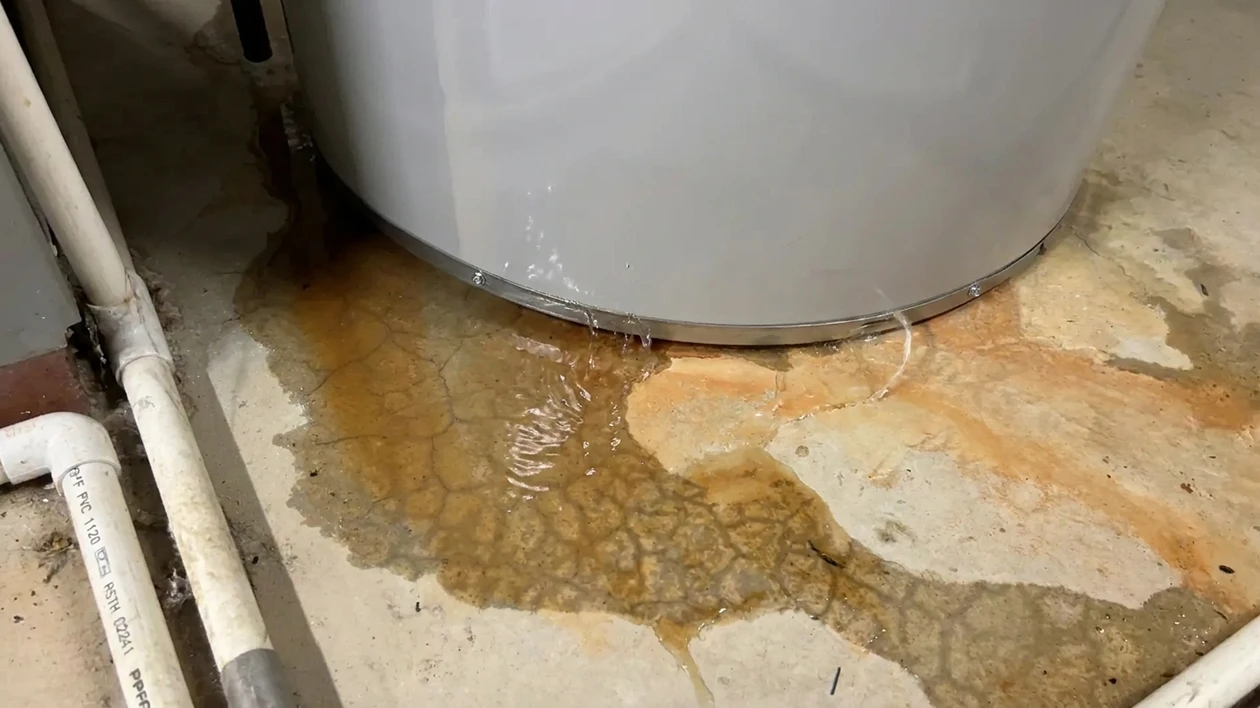
A leaking hot water system needs attention straight away. A slow drip from a valve may still let you take a quick shower, but a leak from the tank itself can lead to sudden failure, flooding and electrical hazards. Before you do anything else, turn off the power or gas and the water supply. Then work out where the leak is.
Is a Leaking Hot Water System an Emergency?
Yes. Treat it as one until you know otherwise. Depending on where the water is coming from, a leak can lead to complete tank failure, serious water damage or an electrical hazard within hours.
Follow these three steps before you try to diagnose anything.
Step 1: Turn off the power or gas
- Electric systems: Switch off the hot water circuit at your switchboard. It’s usually labelled “HWS”, “Hot Water” or “Off Peak”.
- Gas systems: Turn the gas control knob on the unit to “Off” or “Pilot”. If there’s a gas isolation valve on the supply pipe, turn that off too. If you smell gas, leave the area and call a licensed gas fitter.
- Solar and heat pump systems: Switch off the booster and the power supply to the unit.
Important: If water is pooling near your switchboard, a power point or the unit’s electrical cover, don’t touch anything. Stay clear and call a licensed plumber or electrician.
Step 2: Turn off the water
Find the cold water isolation valve on the pipe feeding cold water into the unit. It’s usually a tap-style handle or a lever, sometimes marked with blue. Turn it clockwise until it stops. If the valve is seized or you can’t find it, turn off the main water supply at your water meter, which is usually near the front boundary of your property.
Then open a hot tap somewhere in the house for a minute. It releases pressure in the tank and can slow the leak.
Step 3: Protect the area
Move rugs, boxes, stored items and anything valuable away from the unit. Put down towels or a bucket. It limits damage to floors, skirting boards and walls.
You’ve done it right when: the water has stopped pooling and the power or gas is safely off.
Can I Still Shower or Do Laundry If My Hot Water System Is Leaking?
Not yet. First, check where the leak is coming from. With the power and water off, have a close look at the unit and match what you see to one of these four scenarios.
Is it actually a leak? Wipe the area dry and check again in an hour. If it stays dry, you were probably seeing condensation, which is common when a tank is heating a full load of cold water. If water keeps appearing but you can’t see where it’s coming from, our leak detection service can trace it.
Scenario A: Leaking from the top (pipes or fittings)
Result: Proceed with caution. Water around the pipes and fittings at the top of the unit usually means a loose connection or a worn seal. If it’s a slow drip, you can turn the water back on for a short shower. Then turn it off again.
Scenario B: Dripping from the relief valve or overflow pipe
Result: Proceed with caution, unless it’s a constant stream. The pressure and temperature relief (PTR) valve is designed to release a little water as the tank heats. That’s roughly 2% of the water being heated, according to the Thermann Electric Storage Water Heater Installer’s Manual and Owner’s Guide. A few drips from the drain line during a heating cycle is normal. A constant trickle or stream isn’t. It usually points to one of three things: water pressure coming into the house that’s too high, a worn PTR valve, or a faulty thermostat. Never cap, block or tie off the valve or its drain line.
Many systems also have an expansion control valve on the cold water pipe. It releases cold water when mains pressure rises, and a few drips from it are normal too. If high water pressure is behind the leak, a plumber can fit a pressure limiting valve to fix it.
Scenario C: Leaking from the bottom
Result: Check the drain valve and element first. Look at the drain valve near the base. If it’s dripping, it may just need tightening or replacing. On electric systems, water around the lower cover panel can come from a failed element seal. If the water is coming from the tank itself, the cylinder has corroded through. Do not shower. Using it now only speeds that up, and raises the risk of a rupture and scalding water.
Scenario D: Water is near any electrical components
Result: Do not shower. Leave the power off and keep away from the unit. There’s a real risk of electric shock.
If you’re in Scenario A or B:
- Keep showers under five minutes
- Wash clothes on a cold cycle
- Turn the water supply off between uses
- Book a plumber as soon as possible, because a small drip rarely stays small
How Long Will a Hot Water System Last Once It Starts Leaking?
If your tank is leaking from the base or body, it’s finished. It could fail within days, and there’s no way to predict exactly when.
Key takeaway: A leaking tank won’t fix itself. Once the cylinder is compromised, it only gets worse.
As a rough guide, here’s how a tank leak tends to progress:
- Early signs: Small puddles around the base, damp insulation or casing, and a slight drop in water pressure.
- As it gets worse: More water pooling, damage starting to show on surrounding floors or walls, and less hot water than usual.
- Rupture risk: The tank can let go without warning and release its entire contents. In a typical family home that’s somewhere between 250 and 315 litres of water, enough to cause serious damage to floors, walls and anything stored nearby, especially if your unit is inside the house or in a garage.
Water damage is expensive. Budget Direct’s claims data shows escape of liquid claims, which cover water damage from leaking pipes and appliances, make up almost one in five of its home insurance claims, and the average claim costs close to $24,000. Budget Direct, for example, only covers slow leaks if you couldn’t reasonably have known about them. Once you’ve seen water around your hot water system, leaving it is a risk your policy may not cover.
Is It Cheaper to Repair or Replace a Leaking Hot Water System?
Fixing a leaking hot water system costs about $350 to $600 if a valve is the problem. If the tank is leaking, you’ll need a new system, which ranges from around $1,200 for a basic electric storage swap up to $3,000 to $4,500 or more for a heat pump, before rebates.
Where the leak is coming from decides which one you’re facing. If the problem is a replaceable part, such as the PTR valve, a drain valve or a pipe fitting, repairing it is almost always cheaper. If the tank itself is leaking, it has to be replaced. Tanks can’t be safely patched or welded. A good rule of thumb: if the repair costs more than half the price of a new system, replace it.
Repair or replace?
| Repair | Replace | |
|---|---|---|
| Age of unit | Under 8 years old | 8 years or older |
| Where it’s leaking | Valves, fittings or pipe connections | Base, sides or seams of the tank |
| Warranty | Still covered, or the part is cheap | Out of warranty |
| Typical cost | Under $600 | See pricing below |
How long do hot water systems last? Most last around 8 to 12 years. Water quality, maintenance and the type of system all play a part, so an older unit with a repairable fault may still be worth replacing if it’s close to the end of its life anyway.
How much does it cost to fix a leaking hot water system?
| Job | Typical cost in Sydney |
|---|---|
| PTR or drain valve replacement | $350 to $600 |
| New hot water system, supplied and installed | From around $1,200 (basic electric storage) up to $3,000 to $4,500+ (heat pump, before rebates) |
The cost of a new system depends mostly on the type you need. Electric and gas storage systems sit at the lower end of the range, while continuous flow and heat pump systems cost more. The size of the system, how easy it is to access and whether extra work is needed to meet current standards also affect the price. A like-for-like swap is usually the cheapest option. Switching fuel types, such as gas to electric, adds plumbing and electrical work.
You might see cheaper tanks advertised online or at hardware stores. Buying one yourself and getting a plumber to install it can cost more in the long run. If something goes wrong, the warranty claim goes through the retailer or manufacturer, not the plumber who installed it, so you’re left chasing it and repairs usually take longer. When the plumber who installs your system also supplies it, the warranty stays with them and they can get it fixed much faster. If you do compare an advertised package, check whether it includes removal of your old unit, new valves and a tempering valve, which limits how hot the water gets at your bathroom taps to prevent scalds.
Please note the prices mentioned above are rough indicative figures only and there are situations when the final quote will sit outside of the averages seen above. We recommend you contact Ready Set Plumb for a specific quote based on your requirements.
What to Do Next
Once the power and water are off and the area is safe, work through these steps:
- Check the age of your system. Find the rating plate, a sticker or metal plate on the side of the unit. It shows the manufacture date, model and tank capacity.
- Check your warranty. Tank warranties vary by brand, often 5 years or more. Have your paperwork, or the model and serial numbers, ready.
- Know what your warranty won’t cover. Manufacturer warranties typically cover the water heater itself, not the water damage it causes. The Thermann Installer’s Manual and Owner’s Guide, for example, excludes damage to carpets, furnishings, foundations and buildings. Damage to your floors, cabinetry and walls is a matter for your home insurer.
- Call a plumber and describe the leak. Use the scenarios above to explain exactly where the water is coming from. It helps the plumber bring the right parts and tell you over the phone whether it’s likely a repair or a replacement.
Preventing the next leak
Two simple habits will help stop it happening again. The Thermann Installer’s Manual and Owner’s Guide recommends lifting the PTR valve’s easing lever every six months to stop it seizing, and warns that skipping this can lead to the water heater exploding. It also recommends having a licensed plumber check or replace the PTR valve at least every five years.
Get a leaking hot water system sorted fast. Ready Set Plumb’s licensed plumbers handle hot water system repairs and replacement for electric, gas, heat pump and solar systems across Sydney’s North Shore.