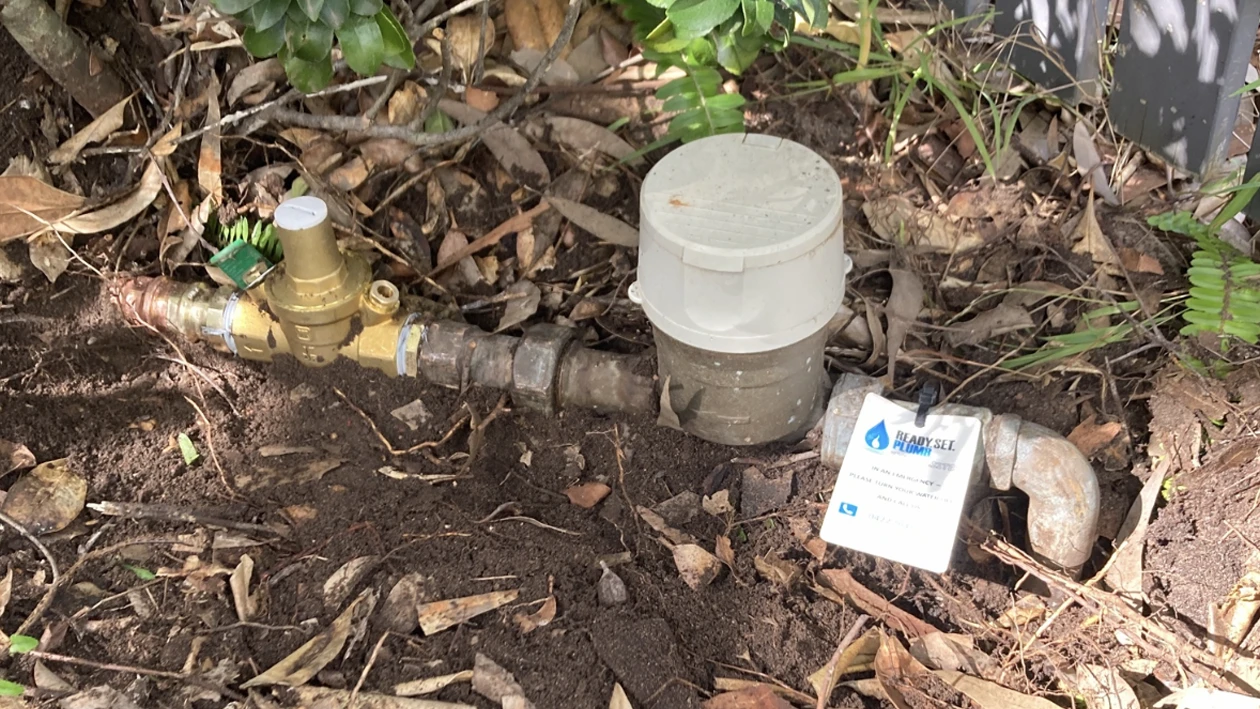
A pressure limiting valve (PLV) is a brass fitting installed on your main water line, usually near the water meter, that caps the pressure entering your home at a safe level, typically between 350 and 500 kPa. It protects your pipes, flexi hoses, tapware and appliances from damage caused by high mains pressure. In NSW, installing or replacing a PLV is regulated plumbing work and must be carried out by a licensed plumber.
Do Pressure Limiting Valves Fail? (Signs and Lifespan)
Yes, and it’s common. Most pressure limiting valves need replacing after around 10 years, sooner in homes with very high mains pressure or water hammer. When one fails, it can stop limiting pressure altogether, letting full mains pressure straight into your home. That puts every flexi hose, joint and appliance connection under extra strain and raises the risk of a burst.
That risk isn’t small. Suncorp’s analysis of more than 22,000 home insurance claims from 2024 found one in ten home water damage claims were caused by burst flexi hoses, with the average claim costing over $27,500. Master Plumbers Australia has pointed to water pressure higher than recommended as one of the causes of flexi hose failures. A failed PLV is one way that happens.
The 60-Second PLV Failure Checklist
Run through these four checks. You don’t need any tools.
- Turn your kitchen tap on fully. Does it spit, splutter or blast water before settling into a steady flow?
- Check your hot water system’s relief valve drain line. Is it dripping or running constantly, rather than releasing a small amount now and then?
- Listen when your washing machine or dishwasher finishes filling. Do you hear a loud bang or knocking in the walls (known as water hammer)?
- Look at the valve itself. Find the brass valve near your water meter. Is there green or white crusty build-up, or water weeping from the body?
What your answers mean: If you answered yes to one or more of these, there’s a good chance your PLV has failed or is on its way out. High pressure can cause all four.
What to do next: If it’s leaking heavily, turn off the mains straight away. Then call a plumber.
Do this now: Head outside and find your water meter. The PLV is usually fitted just after it on your side of the meter. Check it for corrosion, weeping or mineral build-up so you know what you’re dealing with.
Where Is a Pressure Limiting Valve Installed?
Your pressure limiting valve sits on the cold water line, usually just after the water meter at the front of your property. Garden taps are often connected before it so they keep full mains pressure.
Why Is My Pressure Limiting Valve Leaking?
Many PLVs have a small vent hole. Water dripping from it usually means the valve has been damaged by high pressure or water hammer and needs replacing. Never block the hole.
Sourcing Parts: 20mm, 350 kPa and 500 kPa Pressure Limiting Valves at Bunnings
Yes, Bunnings sells RMC pressure limiting valves, which come in 15mm and 20mm sizes with fixed settings of 350, 500 or 600 kPa. Many are special order items rather than stock on the shelf. Picking the right one is trickier.
The PLV Buying Guide
| Valve | Common Use | Notes |
|---|---|---|
| 500 kPa | Standard for whole-house protection and most mains pressure hot water systems | Matches the maximum outlet pressure allowed under the National Construction Code |
| 350 kPa | Appliances and some lower-pressure systems | Check the compliance plate |
| 600 kPa | Only where your hot water system has a higher-rated relief valve | Your plumber will confirm if this applies |
| 20mm size | Standard for most Australian residential mains | Equivalent to 3/4 inch |
Some manufacturers use coloured caps or labels to show the pressure rating, but colours aren’t standardised across brands. Trust the kPa rating, not the colour.
Why It’s Worth Letting Your Plumber Supply the Valve
Rating and size are only half of it. The right replacement also depends on:
- The connection type. Your existing pipework might be copper, PEX or poly, joined with compression fittings, threaded fittings or press fittings. The new valve has to match, or you’ll need adaptors.
- What’s attached to the old valve. Many PLVs sit alongside an isolation valve, a strainer or a dual check valve. If any of these are corroded or seized, they often need replacing at the same time.
- Your hot water system’s requirements. Some units need a lower inlet pressure than the rest of the house, which can mean a second valve on the hot water line.
A licensed plumber will assess all of this on the spot and carry the correct valves and fittings on the van. That saves you buying the wrong part, making a second (or third) trip back to Bunnings, and paying for the plumber to wait or come back another day. One visit, the right part.
Try this now: Take a clear photo of your current valve, including any numbers stamped on the brass body. Send it through when you book, so your plumber can bring the right parts first time.
Common mistake: Fitting a 500 kPa valve when your hot water system’s manufacturer specifies a lower inlet pressure. Running a unit above its rated pressure can shorten its life and may affect your warranty. Check the plate first.
How Much Does It Cost to Install a PLV in Sydney?
A standard, above-ground PLV replacement typically costs $500 to $1,000, including the valve. Harder jobs and tight spaces cost more. Larger valves cost more again. You can’t legally install or replace a PLV yourself in NSW. Water supply work must be done by a licensed plumber. DIY work may also cause problems with an insurance claim.
Typical Cost Breakdown
| Job Type | Typical Cost |
|---|---|
| Standard replacement (20mm valve, above-ground at the meter) | $500 to $1,000 |
| Harder jobs (tight spaces, underground pits, corroded pipework) | Higher, fixed quote on site |
| Larger valves (25mm or 32mm) | Higher again, fixed quote on site |
With Ready Set Plumb, there’s no call-out fee on top.
What Pushes the Price Up
- Awkward or tight spaces around the meter
- Larger valves for 25mm or 32mm meters
- Digging into concrete enclosures or deep underground meter pits
- Cutting out old, corroded pipework
Most replacements take 1 to 2 hours. We test your pressure at the meter first, fit the new valve, then re-test on both sides and show you the readings. You’ll know the price before we start.
How to Proceed
- New build or renovation: The PLV is installed on the cold water line as part of the plumbing work.
- Existing valve showing signs of failure: Book a licensed plumber to test your water pressure and confirm the valve is the problem before replacing it.
- Burst pipe or major leak: Turn off the mains and call an emergency plumber.
Who Should Do What
You can: Visually check the valve, run the 60-second checklist, photograph your valve, and note down your hot water system’s pressure rating.
A licensed plumber must: Test your water pressure, supply and install the correct valve and fittings, and make sure the work is compliant.
Pressure Limiting vs Reducing vs Relief Valves: What’s the Difference?
A pressure limiting valve caps incoming pressure at a set maximum, a pressure reducing valve lowers it to a steady set point, and a TPR valve releases water from your hot water tank when it gets too hot or pressurised.
- Pressure limiting valve (at or near your water meter): Stops the pressure entering your home from going above a set limit. Inside is a spring-loaded piston or diaphragm. When incoming pressure rises above the set limit, the valve partly closes, and it opens again as pressure drops.
- Pressure reducing valve (on the main line, often in higher-pressure areas): Actively lowers incoming pressure to a set level and keeps it steady, even when mains pressure fluctuates. It’s often used where supply pressure is consistently high.
- Temperature and pressure relief valve (on the side or top of your hot water tank): Opens to release water if the temperature or pressure inside the tank reaches an unsafe level.
Under the National Construction Code, the static water pressure at any outlet inside a building must not exceed 500 kPa, and this includes heated water outlets. A plumber checks this by connecting a calibrated pressure gauge to the meter outlet at the property boundary. Above 500 kPa? You need a valve.
Garden taps are the exception. Where full mains pressure is needed at outlets outside the building, those points can be connected before the valve, so you keep strong pressure for hosing while everything inside the house stays protected.
Key takeaway: Your PLV stops high pressure getting into your home. Your TPR valve lets excess pressure and heat escape from your hot water system. If your hot water system’s drain line is running constantly, a failed PLV upstream can be the cause. Check both.
Think Your PLV Has Failed?
Banging pipes, spitting taps or a dripping relief line? Ready Set Plumb can test your pressure and fit the right valve for your home, usually in a single visit. You’ll pay a $0 call-out fee, get a fixed price before we start, and every job is backed by our Lifetime Labour Guarantee. Our team is available 24/7 across Sydney.
Call 0422 704 670 or Get a Free Quote.