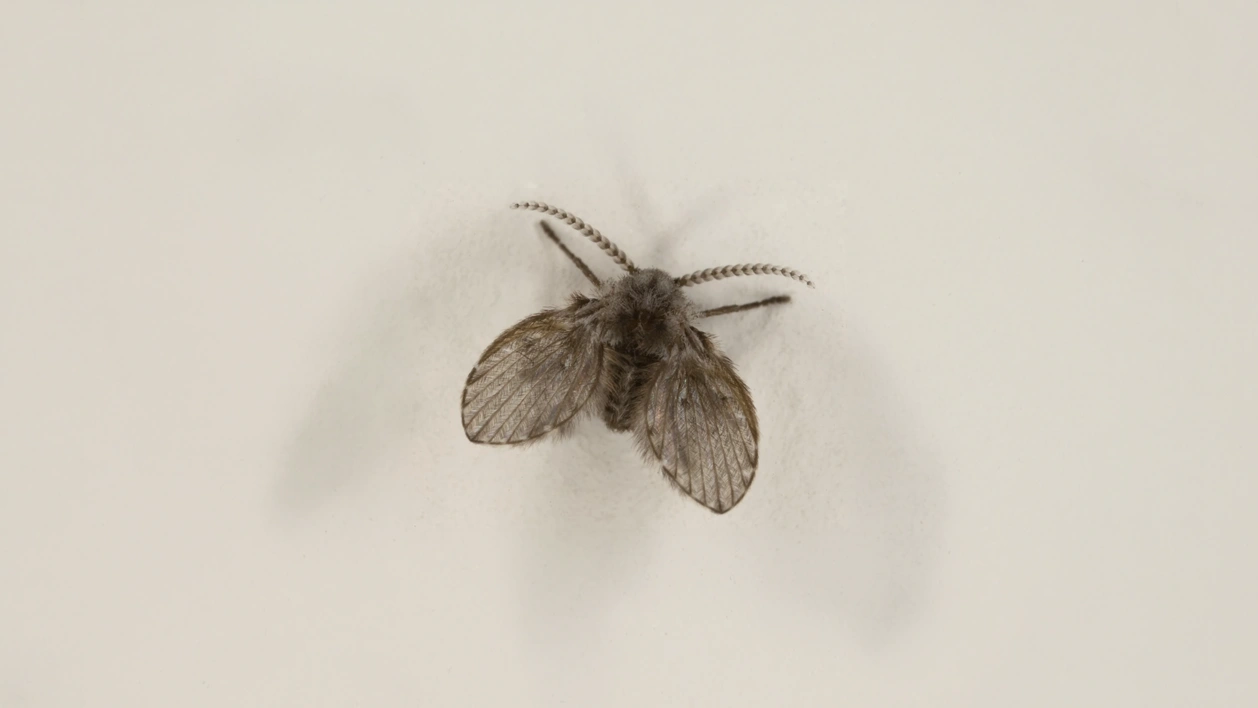
To get rid of drain flies you have to destroy their breeding ground, not the flies themselves. They are small, moth-like insects that breed in the organic buildup inside your plumbing, called biofilm. Remove it and the flies go. The fastest method is a stiff pipe brush followed by an enzyme drain cleaner, or a flush of boiling water, bicarb soda and vinegar to dissolve the organic matter.
What Kills Drain Flies Immediately?
The fastest way to kill drain flies is to physically scrub the drain and remove the biofilm where they lay their eggs, then flush with boiling water and an enzyme cleaner to eat away whatever is left.
Sprays and fly bombs only kill the adults you can see. The next batch hatches out of the pipe within a couple of days. Clear the biofilm and the whole cycle stops.
The 3-Step Extermination Protocol
Step 1: Flush with boiling water.
Boil a full kettle and pour it slowly down the affected drain. This loosens surface debris and kills any adults sitting in the pipe. Pour it in two or three goes rather than all at once so the heat has time to work.
Step 2: Scrub with a metal pipe brush.
This is the step most people skip, and it is the one that matters. Push a stiff metal pipe brush as far down the drain as it will go, then work it up and down against the pipe walls for a full 60 seconds. You are trying to physically break the slime layer off the inside of the pipe. If the brush comes out clean, you have not gone deep enough.
Step 3: Treat with bicarb and vinegar, or an enzyme cleaner.
Pour half a cup of bicarb soda down the drain, followed by one cup of white vinegar. Let it fizz for 20 minutes, then flush with a full kettle of boiling water. If you would rather use a commercial product, a bio-enzymatic drain cleaner will do the same job with less mess, and it keeps working overnight.
Repeat the whole protocol once a day for three days. Eggs already laid in the pipe will hatch during that window, and the repeat treatments catch them.
Try This Now: The Sticky Tape Test
Most homes have more than one drain, and drain flies almost always come from one specific pipe. Before you treat every drain in the house, find the source.
The good news is that drain flies are terrible fliers. They have weak wing muscles and get around mostly by hopping, running and short bursts rather than sustained flight. They do not go far. The drain you are looking for is almost always the closest one to where you keep seeing them.
Place a strip of clear packing tape over half the drain opening, sticky side down, and leave it overnight. Cover half only, because sealing the drain completely stops the flies emerging at all and gives you a false negative. In the morning, check the tape. Flies stuck to the underside mean you have found your breeding drain.
Run the test on every suspect drain at once and you will have your answer by breakfast.
What Success Looks Like
Most of the flies should be gone within 48 hours of clearing the biofilm.
Adult drain flies are short-lived. Males last only a few days, and females that have not yet laid eggs survive up to about a week. Once the breeding ground is gone, the flies you can see die off on their own within days without you doing anything else.
That gives you a clear test. If you are still seeing steady numbers a week after treating, those are not survivors hanging on. They are new flies hatching, which means there is still biofilm in the pipe, or there is a second drain you have missed.
Common Mistakes
- Pouring liquid without scrubbing first. Drain flies and their larvae have water-repellent hairs, and the biofilm itself is a thick gel that most liquids simply run over. Physical scrubbing is what breaks it up.
- Assuming the drain directly below them is the culprit. Adults rest on nearby walls, tiles and ceilings rather than sitting on the drain itself. They will not have come far, but “close by” can still mean the basin next to the shower rather than the shower. Run the tape test on every drain in the room.
- Giving up after one treatment. Eggs hatch in as little as 48 hours. One round of treatment rarely covers the full cycle.
Will Pouring Bleach Down the Drain Get Rid of Drain Flies?
No. Bleach will not get rid of drain flies. It glides straight over the thick, gelatinous biofilm where the larvae and eggs are sitting, so the things you are trying to kill never come into contact with it. You get a clean-smelling drain and the same flies a week later.
Bleach also damages some pipe materials and seals over time, kills the beneficial bacteria in septic systems, and is poor for the waterways it eventually ends up in. One more thing. Never mix it with vinegar or any acidic cleaner, as the combination releases chlorine gas.
| Bleach | Boiling water + bicarb and vinegar | Bio-enzymatic cleaner | |
|---|---|---|---|
| Effect on larvae and eggs | Poor. Runs over the biofilm without penetrating it | Good, once the biofilm has been scrubbed loose | Excellent. Digests the organic matter the larvae feed on |
| Pipe safety | Can degrade seals, some plastics and septic systems | Safe for all standard household pipes | Safe for all standard household pipes and septic systems |
| Speed of results | Kills visible adults only, no lasting effect | Noticeable within 48 hours with repeat treatments | Slower to start, best results over three to seven nights |
If you only buy one product, make it a bio-enzymatic cleaner. It uses bacteria and enzymes to eat the organic sludge rather than trying to burn through it, which is exactly the problem you are solving.
How Can I Get Rid of Drain Flies in Australia?
The approach is the same here. What differs is the products on the shelf, which are not what most overseas guides recommend. You want something formulated to break down organic drain sludge, not a caustic unblocker designed to punch through hair clogs.
Head to Bunnings, Mitre 10 or your local hardware store and ask for bio-enzymatic drain cleaner or drain pellets. Actizyme is the best-known Australian option and is sold in most supermarkets as well. Enzyme products in liquid form are also stocked in the cleaning aisle. Avoid caustic soda and standard chemical drain unblockers for this particular job, as they clear blockages rather than digest the film the larvae live in.
Troubleshooting in an Australian Summer
Heat speeds up the breeding cycle. The larval stage runs about nine to 15 days at 21 degrees, but drops to as little as eight days once temperatures hit around 29 degrees. Across a Sydney or Brisbane summer that compresses the whole 21 to 27 day life cycle, so generations stack up faster and repeat treatments matter more than they would in July.
A few things that catch people out here:
- Laundry and garage floor drains dry out fast in summer, and a dry trap lets flies move up from the sewer. Tip a litre of water down any floor drain you rarely use, once a week.
- Holiday houses and rarely used bathrooms are the classic culprit. Two weeks of no water flow is enough for a colony to establish.
Why Am I Suddenly Getting Drain Flies?
You are suddenly getting drain flies because organic matter, hair, grease, soap scum and food waste, has built up inside your pipes and formed a gelatinous slime called biofilm. Adult flies detect that slime, lay their eggs directly into it, and those eggs hatch in under two days at normal indoor temperatures. Nothing about it is sudden. What looks like an overnight infestation is usually a colony that has been quietly building for a few weeks.
You will see “up to 300 eggs” quoted all over the internet. The entomological research does not support it. University of Florida researchers put the typical egg mass at 15 to 40, with masses of up to 100 reported occasionally. The reason infestations feel explosive is not the size of each clutch, it is the speed of the cycle. Eggs hatch in under 48 hours, the full life cycle runs about 21 to 27 days, and generations overlap.
The trigger is almost always reduced water flow. A drain that gets used daily is scoured clean by the water running through it. A drain that sits idle grows a film.
Check the Big Four
In most homes it is one of these four:
- The guest bathroom or spare ensuite. Rarely used, so nothing scours the pipe and the trap slowly evaporates.
- The kitchen sink and any food waste disposal unit. Grease and food particles are the richest food source in the house.
- Laundry and garage floor drains. Often forgotten entirely, and frequently the trap has dried out.
- The overflow holes in bathroom basins. These almost never get cleaned, and they are a perfect breeding chamber. Poke a cotton bud in one and see what comes out.
Keeping Them Away for Good
Set a weekly reminder and flush every unused drain in the house with a kettle of boiling water. That single habit prevents the vast majority of repeat infestations. Once a month, add an enzyme treatment to the kitchen and laundry drains.
Here is why that works. Female drain flies will not lay eggs on a dry surface. They need damp organic material to lay into, and a pipe wall with nothing on it is not a viable site at all.
Prevention is not really about cleanliness in the general sense. It is about denying them somewhere to lay. Scouring a pipe with boiling water once a week does exactly that, because it strips the film off and takes the laying site with it.
If flies keep returning to the same drain despite consistent treatment, something structural is likely feeding them. A cracked pipe under a slab, a failed trap, or a broken sewer line will keep supplying organic matter no matter how well you scrub the visible section. That is a blocked drain problem, and it needs a camera down the line to find.
Are Drain Flies Harmful, and What Smells Do They Hate?
Drain flies are not directly harmful. They do not bite, they do not sting, and they do not transmit human diseases the way mosquitoes or house flies do. There are two real concerns. In large infestations, the fine scales that shed off their wings and bodies can irritate the airways of people with asthma, and the flies walk across rotting waste before landing on your benchtops.
They are a nuisance and a hygiene issue rather than a health emergency. Worth fixing properly, not worth panicking over.
The Smells Drain Flies Hate
Once the drain is properly clean, strong essential oils will discourage females from coming back to lay. Peppermint, eucalyptus and tea tree all work well.
Two ways to use them:
- Down the drain: five to 10 drops of peppermint, eucalyptus or tea tree oil weekly, straight into a clean drain.
- Around the drain: Mix 10 drops of peppermint oil into one cup of water in a spray bottle and mist around the drain cover and the surrounding benchtop or tiles. This stops females landing in the first place.
Essential oils are a deterrent, not a treatment. Used on a drain that still has biofilm in it, they do nothing at all. Clean first, then deter.
When to Call a Plumber
Most drain fly problems are solved in a weekend with a pipe brush and a kettle. Call a licensed plumber if:
- The flies keep returning to the same drain after two or three full treatment cycles
- You are seeing them in a room with no drain nearby. Because they are such poor fliers, they hatched close by, and infestations inside a house often trace back to a leaking or broken pipe letting them breed under the slab or flooring
- The drain is also slow, gurgling or smelling of sewage, which suggests a partial blockage or a damaged line
- There is a persistent damp patch or musty smell nearby
Recurring drain flies are often the first visible symptom of a bigger drainage problem. A camera inspection will show whether there is a cracked pipe, a root intrusion or a failed trap behind it. That is the point at which scrubbing stops being the answer.
Still Getting Drain Flies?
Recurring flies usually mean a cracked pipe, a failed trap or a partial blockage feeding the biofilm. Ready Set Plumb can camera the line, find the cause, and quote you a fixed price before starting. Lifetime Labour Guarantee on every job.
Call 0422 704 670 or get a free quote. NSW Licence No. 266660C.